
Ten Years of Pain -The Journey Home to Myself-Part 3
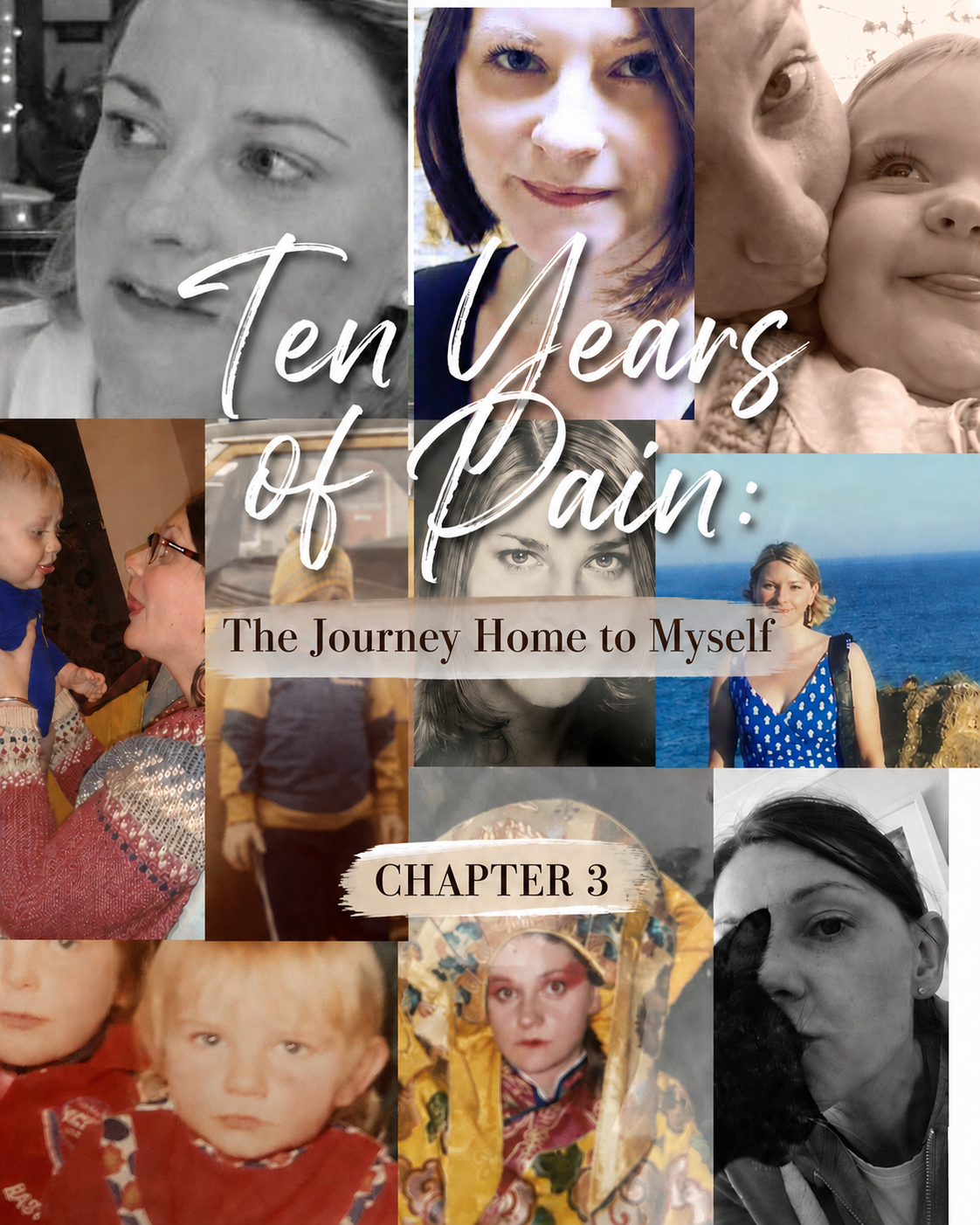
In 2019, I met Rebecca, my final osteopath.
I didn’t know that at the time, of course, but she was about to change everything for me.
On my first visit, she mentioned my nervous system. I thought it all seemed a bit odd. I was there to have my back fixed. But I forgave her because I REALLY liked her vibe. There was something different about her, something that felt both comforting and slightly unnerving at the same time, so I booked another appointment for the following week.
Unlike some of my previous experiences, she didn’t just plonk me on a treatment couch and start manhandling me. Instead, she asked questions about my lifestyle.
“Hello, Rebecca,” I remember thinking, “it’s my back we’re trying to fix here!”
But then she started talking about the nervous system. And the brain. And how pain is created. And how pain becomes chronic. Then she asked if I’d like to borrow a book.
Well, I’m a people pleaser, so of course I said yes.
Oh my goodness.
When she came back into the room carrying the book, I nearly fell off my chair. Not that I actually would have. At that stage, I was terrified to move a bloody muscle. But the book was HUGE.
My first thought was, “You want me to carry that enormous thing all the way across London and back to Essex with degenerative disc disease? Rebecca, are you mad?”
Thankfully, I am considerably more polite than the voice in my head, so I smiled, thanked her and tucked the weighty publication into my bag.
The book was Explain Pain by David Butler and Lorimer Moseley.
And it was fascinating.
For the first time, I was reading an explanation of pain that made sense to me. The book explained how pain is created by the brain and nervous system and how pain can become chronic even when there is no ongoing injury. Most importantly, it planted the first tiny seed of doubt.
What if the diagnosis I’d been given wasn’t actually the cause of my pain?
Working with Rebecca eased my symptoms a little, and then Covid arrived, bringing face-to-face sessions to an abrupt end. I’d been seeing physiotherapists and osteopaths for years, but Rebecca was the first person who had genuinely shifted something for me.
Then, one sunny day, she sent me an email.
Inside was a link to SIRPA, the Stress Illness Recovery Practitioners’ Association. She suggested I take a look and thought it might be helpful.
Helpful?
That email changed my life.
There are so many people I have to thank on this journey, but I will never forget Rebecca.
Thank you.
SIRPA provides an evidence-based approach to chronic pain and other persistent neuroplastic symptoms, helping people regain their lives when conventional medicine hasn’t provided clear answers.
In other words, me.
It led me to understand the connection between my mind, my thoughts, my emotions and my body. It also introduced me to the concept of neuroplastic pain.
Simply put, neuroplastic pain is real pain generated by an overprotective nervous system rather than ongoing damage or injury within the body. The pain is absolutely real, but the danger signals being produced by the brain no longer accurately reflect what’s happening physically.
The moment I understood this, something shifted.
It just made sense.
More importantly than anything else, it gave me hope.
I watched countless recovery stories, listened to podcasts, read books and cried. I cried for the years I’d lost to pain, for the fear, for the frustration and for the anger.
But I also cried with hope.
For the first time in years, I felt like I had found an answer.
And there was no turning back.
I worked one-to-one with a practitioner for several months and became completely immersed in learning everything I could about this field. I couldn’t get enough of it. The information was life-changing.
Not only was it backed by the latest neuroscience, but it also introduced me to concepts I had never previously considered.
The first thing to change wasn’t my pain.
It was my belief.
I no longer viewed myself as damaged. I no longer attributed my pain to the diagnoses I’d been given. I had gathered enough evidence to believe my symptoms were neuroplastic and, slowly but surely, they were beginning to change.
I started caring for myself differently. I developed a deeper understanding of who I was and a level of compassion and respect for myself that I’d never really experienced before. My fear of pain became smaller and smaller, and in its place grew gratitude, joy and freedom.
I formed an entirely new relationship with my body. A loving one. A trusting one.
And recovery started finding its way to me.
I stopped pushing myself so hard. I lowered the impossible expectations I’d always placed upon myself and began guiding myself with gentleness instead of criticism.
My recovery from chronic pain took around six months. I used Pain Reprocessing Therapy alongside Emotional Awareness and Expression techniques. I learned methods that helped calm, soothe and reassure an over sensitised nervous system that had spent years stuck in protection mode.
The changes happened gradually. So gradually, in fact, that I barely noticed them at first.
Then one day I found myself standing in the kitchen, amazed that I’d bent down to get a saucepan out of a cupboard.
No fear.
No reaction.
No pain.
It felt miraculous.
As part of my recovery, I also started running for the first time in my life. I bought a pair of running shoes and made a promise to my body:
We are strong.
We are flexible.
We are free.
And do you know what?
We were.
Now, I don’t run marathons because, frankly, I don’t want to run that far.
But I do run.
Sometimes with no back niggles at all. Sometimes with the occasional one.
Either way, I am filled with joy because I can.
And that’s what recovery means to me.
Let me explain.
When I say I have recovered, I don’t mean that I never experience symptoms. I still get little niggles. Occasionally, I get louder reminders from my back.
The difference is that the fear response has gone.
When symptoms show up now, I become curious. I listen. I gently explore what might be going on in my life that has prompted my greatest protector to speak up.
Because that’s what I now believe these symptoms are.
Protection.
On every level.
My body speaks when life gets lifey.
And I do my best to listen.
When you’ve been through something this profound, something this life-changing, you naturally want to tell the world.
This blog is for the world.
Whether that’s one other Lindsay or ten million people.
Everyone deserves access to this information. Everyone deserves to understand pain science and learn about neuroplastic symptoms so they can make their own informed decisions.
This isn’t about managing pain.
We’re talking about recovery.
Real recovery.
Going back to doing the things you love.
And yes, sitting at a ninety-degree angle in bed watching your favourite programme with a handful of chocolate pretzels absolutely counts.
Life-changing stuff.
Eventually, I left my corporate career after twenty-five years.
I trained as a Life Coach, a SIRPA Practitioner, a Pain Reprocessing Coach and a Yoga Nidra Practitioner. I also joined my local choir and can now be found on Thursday evenings belting out a tune with immense gratitude and love for my thing.
Because we’ve all got to have a thing.
My deepest joy is now supporting clients through their own recovery journeys, empowering them to find their unique path through what can often feel like an impossible situation.
Together, with hope, courage, knowledge and determination, recovery becomes possible.
A heartfelt thank you to all of the pioneers, researchers and practitioners in the field of mind-body medicine. Your courage, conviction and dedication have changed lives, including mine.
The pain that I feared so much has become my deepest lesson and, in many ways, my greatest gift.
It became the compass that guided me home.
Home to my body.
Home to my voice.
Home to myself.
If you need a gentle hand to hold on your journey please reach out https://calendly.com/lindsay-vibrantcoaching/30min
